
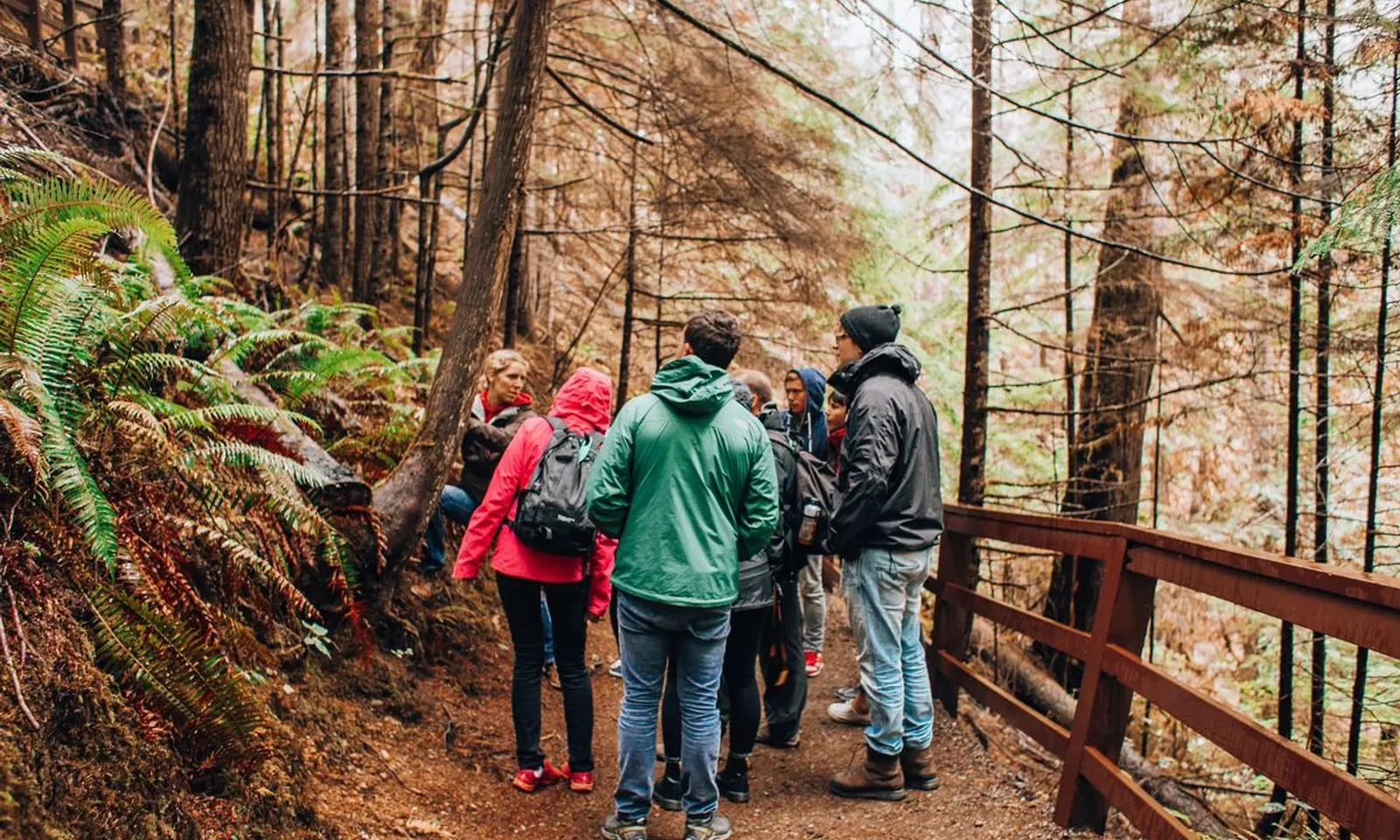
Leaving a familiar classroom can make a question more tangible and invite students to observe with fresh attention.
Who can take part and when.
| Who | By stage |
|---|---|
| When | Dates are listed in the school calendar |
Connect the setting with the learning.
A journey is most useful when students understand why the place matters. A landscape, a workshop, a performance or a local institution can provide evidence that is difficult to encounter in the same way through a textbook. Preparation helps students know what to notice and what questions to bring.
The learning continues afterwards. Notes, sketches, observations and conversations can be compared, interpreted and used to develop a more considered explanation. A visit becomes part of a sequence rather than a disconnected experience.
Prepare to participate.
The learning purpose
Understand the connection with current work and the questions students will investigate.
Practical arrangements
Confirm the schedule, supervision, transport, equipment and any permissions relevant to the particular experience.
Individual needs
Discuss access, health, communication or other needs early through the appropriate school contact.
Shared responsibility
Agree how students will take care of one another, the setting and the people they encounter.
Independence in a new context.
An unfamiliar setting asks students to use familiar habits differently. They may need to organise materials, listen to instructions in a busy place or make a careful observation without the usual classroom prompts. These are opportunities to develop responsibility with appropriate guidance.
Not every worthwhile experience requires a long journey. A nearby environment can reveal rich questions when students are encouraged to look closely. The educational purpose, preparation and reflection matter more than the distance travelled.
Bring the learning back.
A field visit becomes more useful when the observations have a clear role in the next piece of work.
Prepare a field question
Decide what the setting can reveal that a classroom source cannot. Agree a small set of observations and a practical way to record them.
Separate observation from interpretation
Record what was seen or heard before explaining what it might mean. Keep the context, time and source clear enough to compare with another account.
Use the evidence
Create a map, explanation, design or discussion that draws directly on the record. Identify what the visit clarified and which questions still require another source.
See where curiosity could take you.
Start with a conversation about learning at CDI.
Book a Visit